
A New Vision of Connection: Toward Greater Cooperation in the Caribbean and Latin America (CAL)
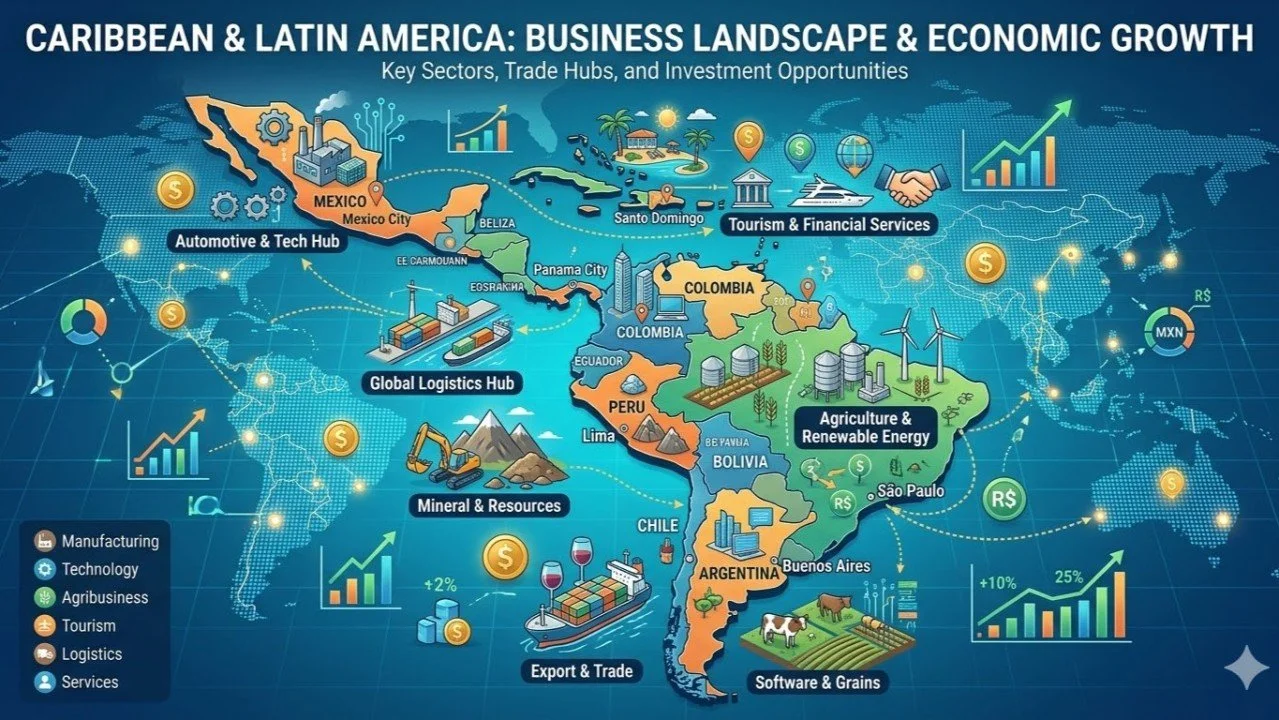
If there’s one lesson Latin America and the Caribbean has learned from decades of integration efforts, it’s that ambition isn’t enough — implementation matters.
In a new piece from the Inter-American Development Bank, regional cooperation is framed less as a grand, one-size-fits-all project and more as a practical tool for joint problem-solving — built around clear priorities, flexible participation, and measurable outcomes.
What’s changing
Earlier waves of integration delivered real wins, but momentum often stalled because of:
rigid frameworks
overly broad mandates
misalignment across countries
weak follow-through
The shift underway is results-first cooperation designed for today’s global reality: tighter fiscal space, slower growth, and higher pressure from climate, trade, technology, and resilience challenges.
Four platforms that signal the new model
The article highlights four country-driven programs supported by the IDB:
Amazonia Forever
América en el Centro
ONE Caribbean
South Connection
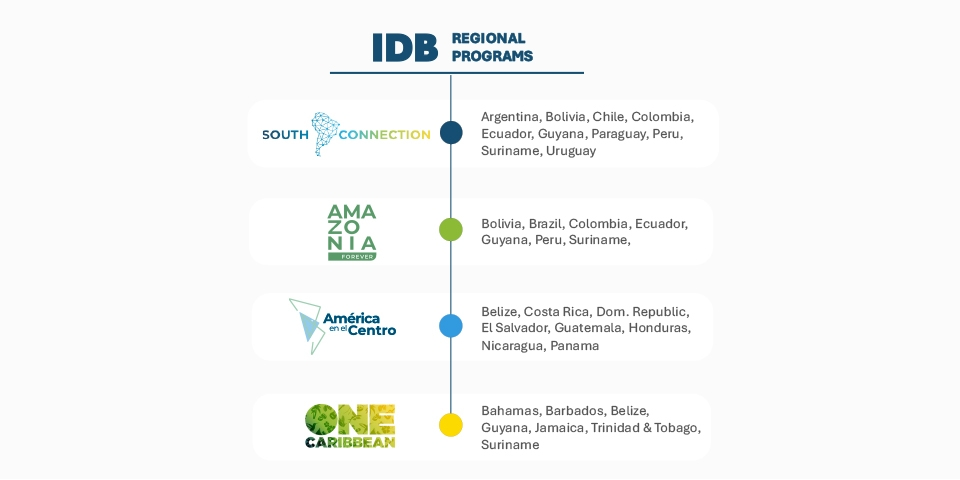
Source: Inter-American Development Bank (IDB)
Quick summaries for context:
Amazonia Forever (IDB Group): A regional coordination program for sustainable and inclusive development in the Amazon region, focused on scaling financing, strengthening project impact, sharing innovations, and improving regional coordination.
América en el Centro (IDB Group): An umbrella regional development program for Central America, Panama, and the Dominican Republic (CAPDR), focused on cross-border challenges, sustainable development, and resilience.
ONE Caribbean (IDB Group): The IDB Group’s regional strategic framework for coordinated action across shared Caribbean challenges.
South Connection (IDB Group): A regional program to boost connectivity and competitiveness in South America via resilient physical, digital, and energy connectivity.
What’s notable is not just the “what”, but the “how”:
Functional cooperation: narrow priorities and operational pillars, grounded in demand.
Flexible participation: countries can join, and then opt into projects where there’s real interest and spillover value.
Streamlined governance: built into the IDB’s regular institutional norms, rather than creating new layers.
Financing as a catalyst: innovative instruments like guarantees, debt swaps, and parametric insurance to unlock implementation.
Private sector embedded: not as an afterthought, but as part of designing pipelines and bringing viable projects to market.
Why this matters for south-south cooperation
For anyone building south-south cooperation, this is a useful blueprint:
Start with shared constraints (connectivity, logistics, standards, climate risk)
Define a small set of regional priorities that are feasible to execute
Design for participation, not perfection
Measure what changes and adjust fast
And perhaps most importantly:
regional cooperation becomes more powerful when it produces tangible wins that can scale.
A question to explore
If your work touches cross-border collaboration in the Global South:
What is one shared challenge that is ready for a focused, measurable regional platform — and what would the first 12 months of action look like?
Source: Inter-American Development Bank (Mar 12, 2026): https://www.iadb.org/en/blog/regional-integration/reimagining-regional-cooperation-latin-america-and-caribbean-flexible-pragmatic-impactful